
Documents
Taking a car or motorcycle on a ferry: from booking to boarding
Book the correct vehicle size, prepare a small onboard bag and follow the sailing-specific instructions for a smoother crossing.
- Topic
- Documents
- Published
- Last reviewed
- 18 September 2026
- Official source
- Open source ↗
A ferry can turn a long road journey into a welcome break, provided the booking describes the vehicle that actually arrives. Prepare the crossing as its own stage, with a check-in deadline, travel documents and a plan for delayed sailing.
Measure before booking
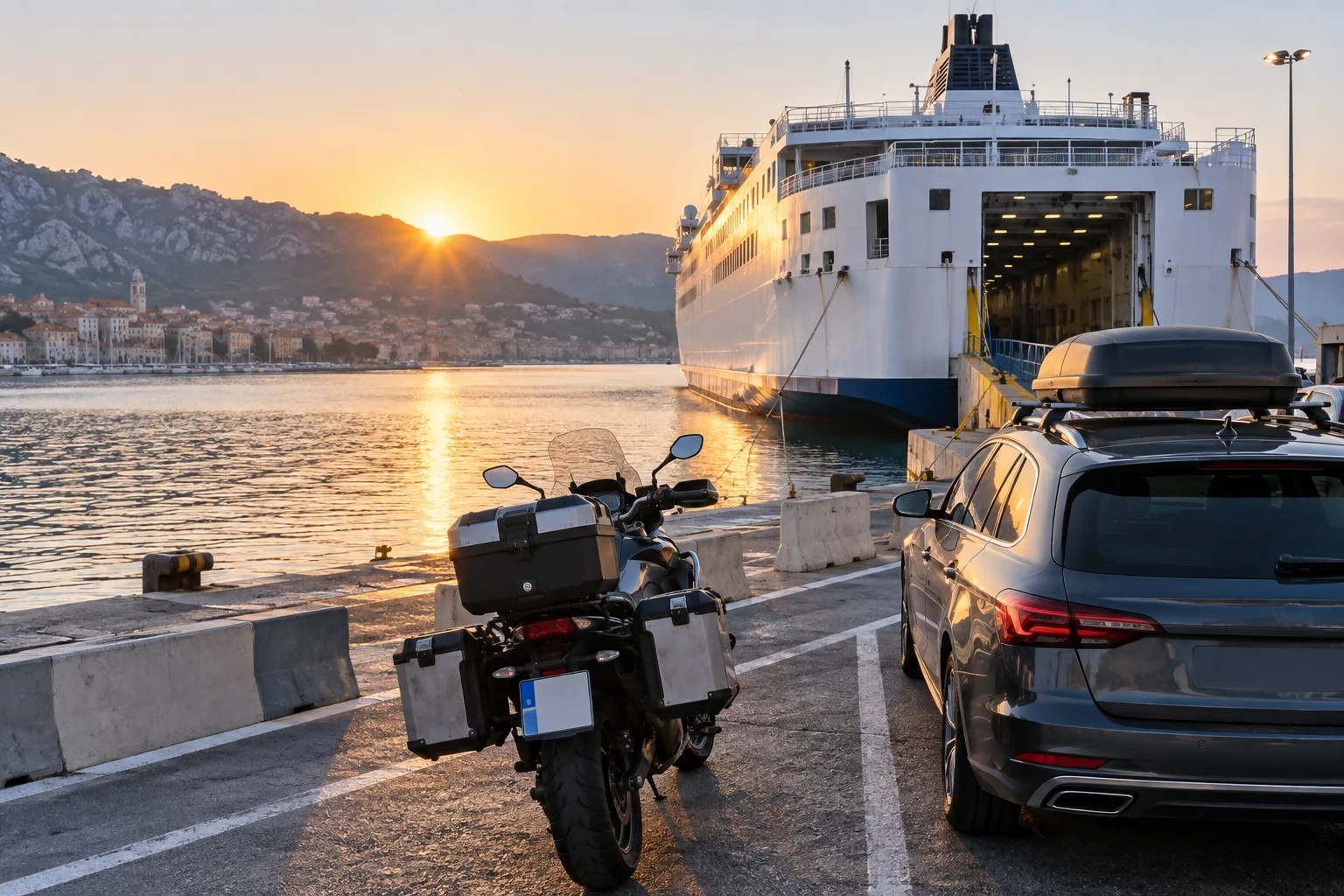
Use the full vehicle dimensions, including a roof box, bicycles, rear carrier or trailer. Select the correct motorcycle or sidecar category rather than assuming all two-wheel bookings are identical. Brittany Ferries, for example, explicitly asks customers to include roof loads in the declared height. Other operators may organise their categories differently.
Read the carrier's rules for pets, gas cylinders, alternative-fuel vehicles and batteries where relevant. Requirements can depend on the route and vessel. If something is unclear, obtain written confirmation before paying.
Prepare for the port
Use the terminal address on the ticket, not just the town's harbour pin. Check local time, the latest check-in deadline and sailing updates. Leave a buffer for traffic and document checks. Keep passports or other accepted travel documents, booking details and the vehicle registration together.
Pack a small onboard bag
Take medication, valuables, warm layers, chargers and what you need for children or pets. Access to vehicle decks may be restricted during the crossing; confirm the vessel's arrangements and take essentials before leaving the car or motorcycle.
Board calmly
Follow crew directions for the lane, spacing and parking position. Motorcyclists should ask how the crew wants the bike secured and what assistance is provided; tie-down procedures vary. Mention any concern before leaving the deck. Do not improvise around unfamiliar equipment while vehicles are moving nearby.
On arrival
Wait for instructions to return to the vehicle, check that luggage and motorcycle restraints have been dealt with correctly, and prepare navigation while stationary. Give yourself time to adjust to the destination's traffic direction and road signs. Avoid making the first post-ferry stage the longest driving day of the holiday.
Sources and further reading
Brittany Ferries — travelling with a motorbike
https://www.brittany-ferries.co.uk/information/travel-advice/travelling-with-a-motorbike
Brittany Ferries — booking the correct vehicle type
https://www.brittany-ferries.co.uk/information/faqs/booking-information/booking-the-correct-vehicle-type
Measure before booking
Use the full vehicle dimensions, including a roof box, bicycles, rear carrier or trailer. Select the correct motorcycle or sidecar category rather than assuming all two-wheel bookings are identical. Brittany Ferries, for example, explicitly asks customers to include roof loads in the declared height. Other operators may organise their categories differently.
Read the carrier's rules for pets, gas cylinders, alternative-fuel vehicles and batteries where relevant. Requirements can depend on the route and vessel. If something is unclear, obtain written confirmation before paying.
Prepare for the port
Use the terminal address on the ticket, not just the town's harbour pin. Check local time, the latest check-in deadline and sailing updates. Leave a buffer for traffic and document checks. Keep passports or other accepted travel documents, booking details and the vehicle registration together.
Pack a small onboard bag
Take medication, valuables, warm layers, chargers and what you need for children or pets. Access to vehicle decks may be restricted during the crossing; confirm the vessel's arrangements and take essentials before leaving the car or motorcycle.
Board calmly
Follow crew directions for the lane, spacing and parking position. Motorcyclists should ask how the crew wants the bike secured and what assistance is provided; tie-down procedures vary. Mention any concern before leaving the deck. Do not improvise around unfamiliar equipment while vehicles are moving nearby.
On arrival
Wait for instructions to return to the vehicle, check that luggage and motorcycle restraints have been dealt with correctly, and prepare navigation while stationary. Give yourself time to adjust to the destination's traffic direction and road signs. Avoid making the first post-ferry stage the longest driving day of the holiday.
Sources and further reading
Brittany Ferries — travelling with a motorbike
https://www.brittany-ferries.co.uk/information/travel-advice/travelling-with-a-motorbike
Brittany Ferries — booking the correct vehicle type
https://www.brittany-ferries.co.uk/information/faqs/booking-information/booking-the-correct-vehicle-type