
Emergencies
Breakdown abroad: make the first few minutes count
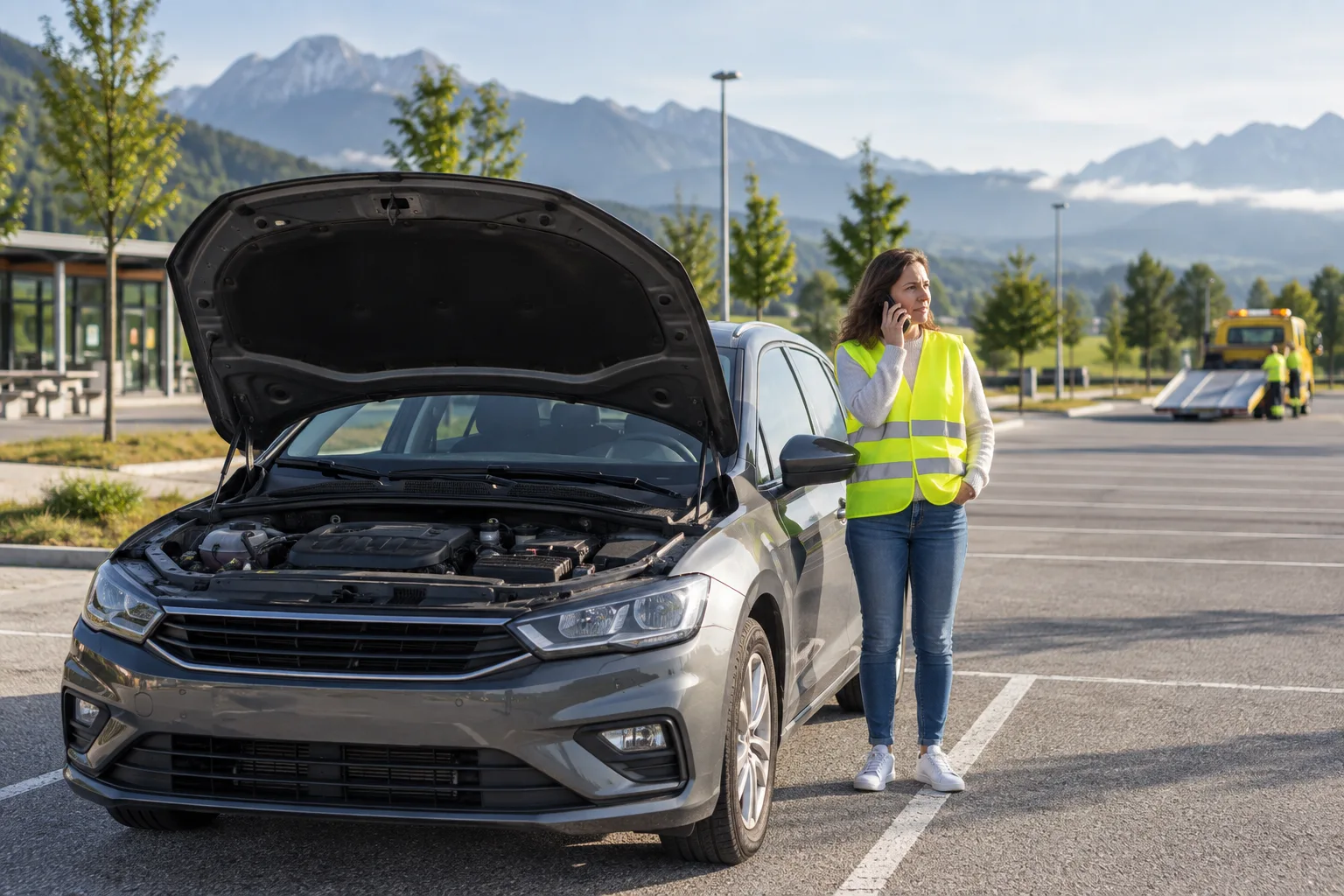
Prepare assistance details, describe your location clearly and understand what to ask before authorising recovery or repairs.
- Topic
- Emergencies
- Published
- Last reviewed
- 18 September 2026
- Official source
- Open source ↗
A breakdown becomes harder to manage when the assistance number is buried in an email and nobody knows which direction the road runs. Prepare a short recovery note before the journey and keep it available offline.
Put people before the vehicle
If possible, reach a designated parking or service area and use hazard lights. Leave on the side away from traffic only when safe, then keep clear of moving vehicles. If you cannot get out safely, remain belted and call emergency services immediately. Follow the local operator's instructions; roadside-warning rules differ. In Great Britain, the Highway Code says never to place a warning triangle on a motorway.
Know whom to call
Across the EU, 112 is the free emergency number for urgent police, fire or medical help. A routine mechanical problem in a safe car park normally belongs with your breakdown provider. If the vehicle obstructs traffic or anyone is in danger, explain that immediately to emergency services. Outside the EU, save the destination's emergency and road-operator contacts before travelling.
Give a useful location
Read the road number, direction of travel, nearest junction and any marker visible without approaching traffic. Add your phone's coordinates if available, but do not rely on a hotel name kilometres away. Tell the operator how many people are present, whether anyone needs assistance and whether you are towing or travelling by motorcycle.
Before agreeing to recovery
Ask your provider who is authorised to attend, where the vehicle will go and which charges require approval. Clarify passenger transport, overnight accommodation, storage, repairs and repatriation. Record the case number and the responder's details. Obtain a written estimate before non-emergency work where possible.
Keep the paperwork
Save receipts and recovery records and photograph damage only from a safe location. Do not attempt roadside repairs beside fast traffic. Once everyone is safe, contact your accommodation and adjust the route: losing a day is preferable to continuing with an unresolved fault.
Sources and further reading
European Union — emergency number 112
https://europa.eu/youreurope/citizens/travel/security-and-emergencies/emergency/index_en.htm
Great Britain Highway Code — breakdowns and incidents
https://www.gov.uk/guidance/the-highway-code/breakdowns-and-incidents-274-to-287
Put people before the vehicle
If possible, reach a designated parking or service area and use hazard lights. Leave on the side away from traffic only when safe, then keep clear of moving vehicles. If you cannot get out safely, remain belted and call emergency services immediately. Follow the local operator's instructions; roadside-warning rules differ. In Great Britain, the Highway Code says never to place a warning triangle on a motorway.
Know whom to call
Across the EU, 112 is the free emergency number for urgent police, fire or medical help. A routine mechanical problem in a safe car park normally belongs with your breakdown provider. If the vehicle obstructs traffic or anyone is in danger, explain that immediately to emergency services. Outside the EU, save the destination's emergency and road-operator contacts before travelling.
Give a useful location
Read the road number, direction of travel, nearest junction and any marker visible without approaching traffic. Add your phone's coordinates if available, but do not rely on a hotel name kilometres away. Tell the operator how many people are present, whether anyone needs assistance and whether you are towing or travelling by motorcycle.
Before agreeing to recovery
Ask your provider who is authorised to attend, where the vehicle will go and which charges require approval. Clarify passenger transport, overnight accommodation, storage, repairs and repatriation. Record the case number and the responder's details. Obtain a written estimate before non-emergency work where possible.
Keep the paperwork
Save receipts and recovery records and photograph damage only from a safe location. Do not attempt roadside repairs beside fast traffic. Once everyone is safe, contact your accommodation and adjust the route: losing a day is preferable to continuing with an unresolved fault.
Sources and further reading
European Union — emergency number 112
https://europa.eu/youreurope/citizens/travel/security-and-emergencies/emergency/index_en.htm
Great Britain Highway Code — breakdowns and incidents
https://www.gov.uk/guidance/the-highway-code/breakdowns-and-incidents-274-to-287