
Spain
Picos de Europa & Green Spain Loop
Combine limestone peaks, historic mountain towns, pilgrimage sites, Atlantic beaches, prehistoric heritage, and the food culture of Green Spain.
- Location
- Picos de Europa, Cantabria and Asturias, Spain
- Difficulty
- Moderate
- Best season
- May to October
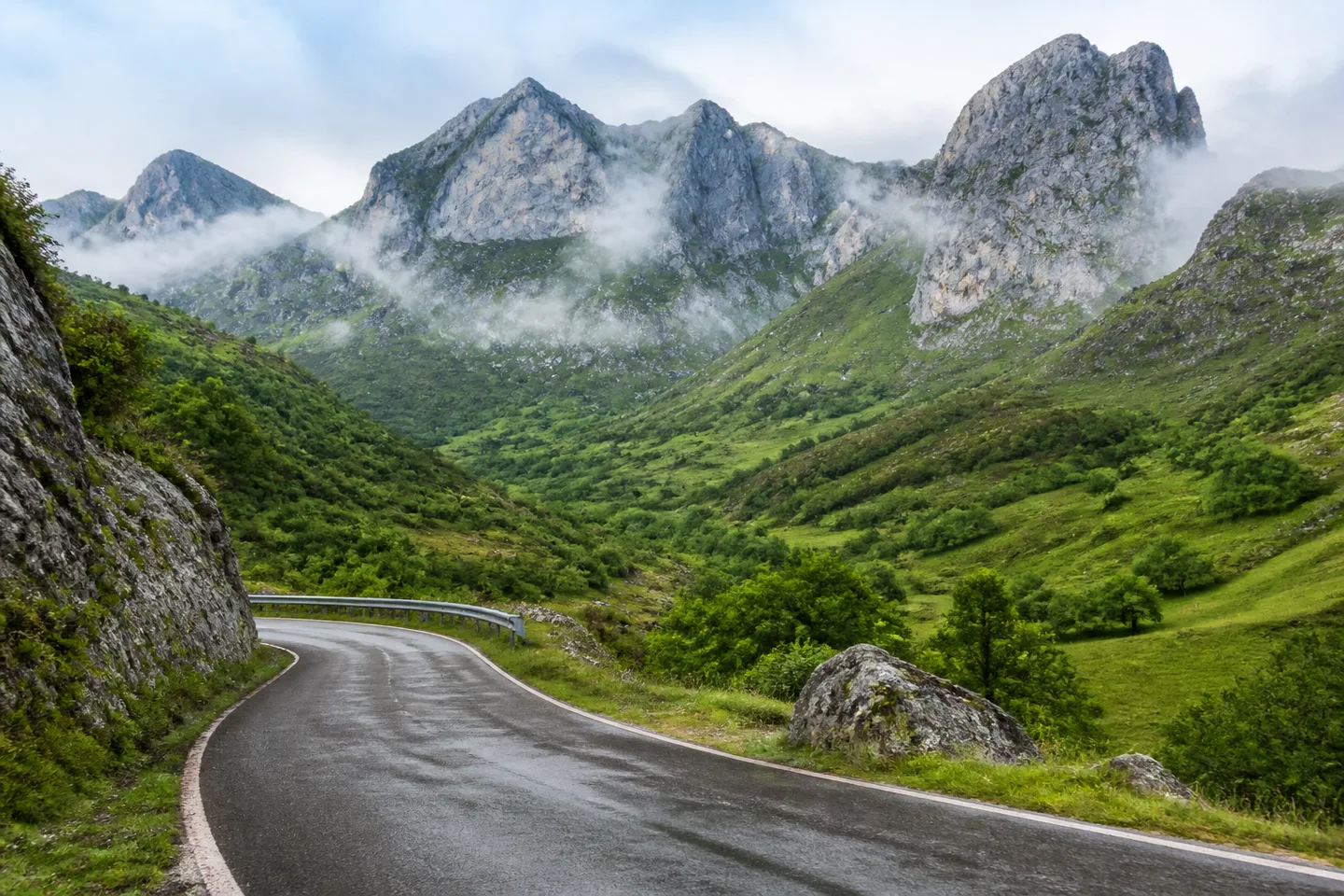
The Picos de Europa rise sharply between Cantabria, Asturias, and León, bringing limestone towers, deep gorges, beech and oak woodland, mountain pastures, and villages where people still live inside the national park. The nearby Atlantic coast adds beaches, fishing towns, and a completely different landscape within a compact region.
Potes is an attractive base in the Liébana valley, with stone lanes, bridges, traditional buildings, and the Torre del Infantado. Local menus feature cocido lebaniego, mountain cheeses, game dishes, and orujo. At Fuente Dé, a cable car reaches the high mountain environment rapidly, opening broad views and access to marked walks when weather and operations allow.
On the Asturian side, Covadonga combines the Santa Cueva sanctuary, basilica, and major historical significance. Higher in the mountains, Lakes Enol and Ercina sit among pastures and limestone peaks. Private vehicle access is controlled during busy periods, so visitors may need to use official shuttle transport.
Cangas de Onís is recognised by its historic arched bridge over the River Sella and also has the ancient Santa Cruz chapel site. Ribadesella offers a beach, riverfront, old streets, and prehistoric heritage at Tito Bustillo Cave; visits to the cave normally require limited, advance admission. Along the coast, viewpoints reveal cliffs, estuaries, and the green foothills behind them.
Gijón adds the seafront, the old fishing quarter of Cimavilla, museums, cider houses, and urban beaches. Across the region, look for Cabrales and other blue cheeses, Asturian fabada, seafood, and traditional cider. Check national-park access, cable-car status, cave reservations, mountain weather, and seasonal transport before visiting.
Potes is an attractive base in the Liébana valley, with stone lanes, bridges, traditional buildings, and the Torre del Infantado. Local menus feature cocido lebaniego, mountain cheeses, game dishes, and orujo. At Fuente Dé, a cable car reaches the high mountain environment rapidly, opening broad views and access to marked walks when weather and operations allow.
On the Asturian side, Covadonga combines the Santa Cueva sanctuary, basilica, and major historical significance. Higher in the mountains, Lakes Enol and Ercina sit among pastures and limestone peaks. Private vehicle access is controlled during busy periods, so visitors may need to use official shuttle transport.
Cangas de Onís is recognised by its historic arched bridge over the River Sella and also has the ancient Santa Cruz chapel site. Ribadesella offers a beach, riverfront, old streets, and prehistoric heritage at Tito Bustillo Cave; visits to the cave normally require limited, advance admission. Along the coast, viewpoints reveal cliffs, estuaries, and the green foothills behind them.
Gijón adds the seafront, the old fishing quarter of Cimavilla, museums, cider houses, and urban beaches. Across the region, look for Cabrales and other blue cheeses, Asturian fabada, seafood, and traditional cider. Check national-park access, cable-car status, cave reservations, mountain weather, and seasonal transport before visiting.