
Spain
Costa Brava: Cadaqués & Tossa de Mar
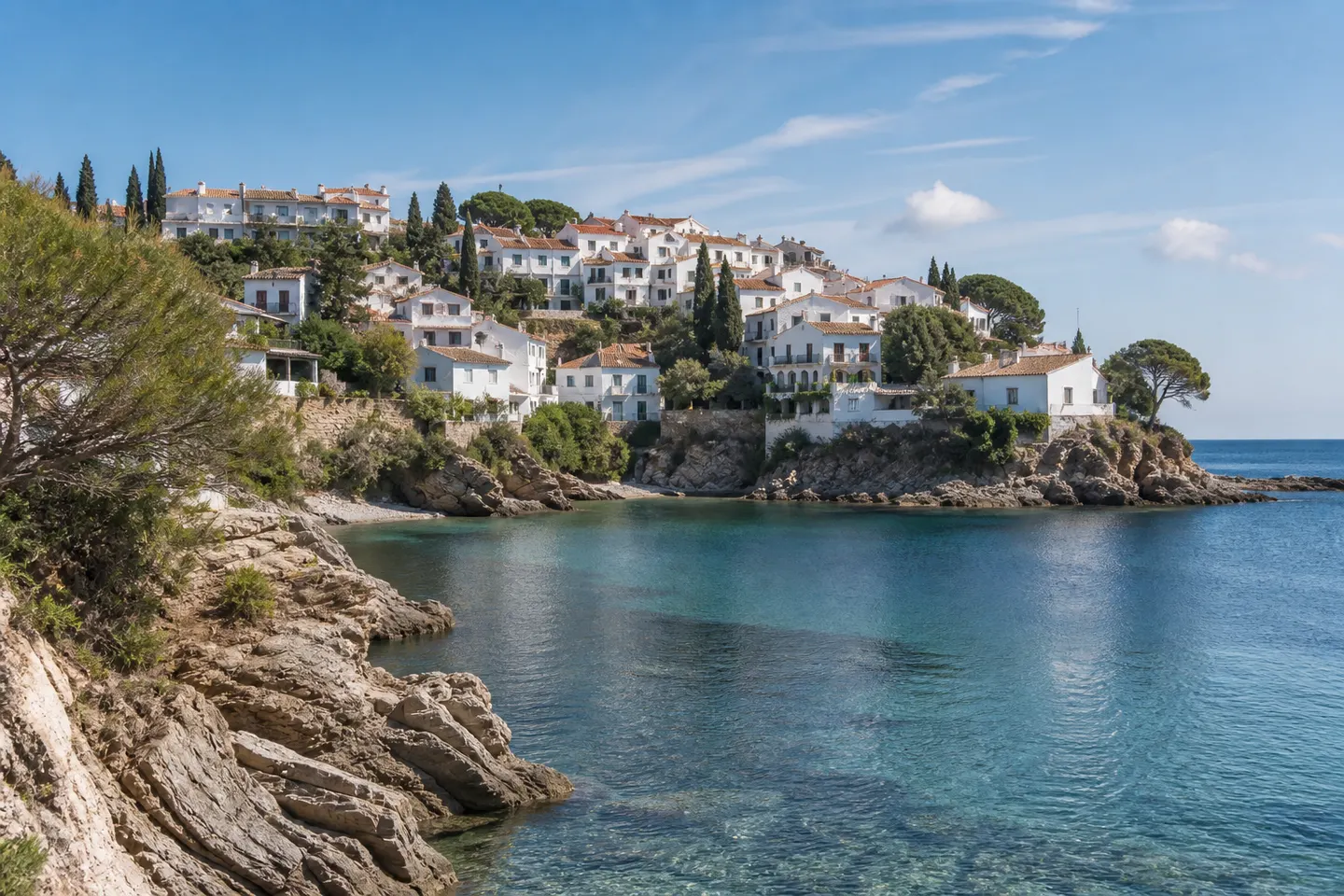
Rocky Mediterranean coves, whitewashed fishing towns, coastal paths, medieval walls, and the landscapes that inspired artists.
- Location
- Cadaqués, Cap de Creus, and Tossa de Mar, Catalonia, Spain
- Difficulty
- Moderate
- Best season
- May to June or September to October
The Costa Brava mixes rugged headlands, pine-backed coves, fishing heritage, and historic towns. Cadaqués curls around a sheltered bay with whitewashed houses, steep lanes, small galleries, and the hilltop church of Santa Maria. In nearby Portlligat, Salvador Dalí’s former home is now a museum with tightly controlled admission; reserve well ahead if it is important to your visit.
Cap de Creus Natural Park feels wilder. Wind-shaped rock, low scrub, hidden calas, and open sea views create an austere landscape that influenced Dalí. Follow signed paths and check fire-risk restrictions, because access and parking can be limited in hot or windy weather. South of Cadaqués, the Sant Pere de Rodes monastery occupies a commanding mountain position above the coast.
Tossa de Mar offers a different atmosphere. Vila Vella is the only surviving fortified medieval town on the Catalan coast, with towers, stone lanes, and viewpoints above the main beach. The old fishermen’s quarter, municipal museum, and coastal paths reward a slower visit. Elsewhere, Begur and Calella de Palafrugell add hilltop heritage, small beaches, and traditional seaside architecture.
Try local fish, rice dishes, anchovies from L’Escala, and crema catalana. Some coves require steep walks and have little shade. Check museum reservations, park controls, trail notices, and weather, and avoid entering closed coastal paths.
Cap de Creus Natural Park feels wilder. Wind-shaped rock, low scrub, hidden calas, and open sea views create an austere landscape that influenced Dalí. Follow signed paths and check fire-risk restrictions, because access and parking can be limited in hot or windy weather. South of Cadaqués, the Sant Pere de Rodes monastery occupies a commanding mountain position above the coast.
Tossa de Mar offers a different atmosphere. Vila Vella is the only surviving fortified medieval town on the Catalan coast, with towers, stone lanes, and viewpoints above the main beach. The old fishermen’s quarter, municipal museum, and coastal paths reward a slower visit. Elsewhere, Begur and Calella de Palafrugell add hilltop heritage, small beaches, and traditional seaside architecture.
Try local fish, rice dishes, anchovies from L’Escala, and crema catalana. Some coves require steep walks and have little shade. Check museum reservations, park controls, trail notices, and weather, and avoid entering closed coastal paths.