
Romania
Sighișoara Citadel
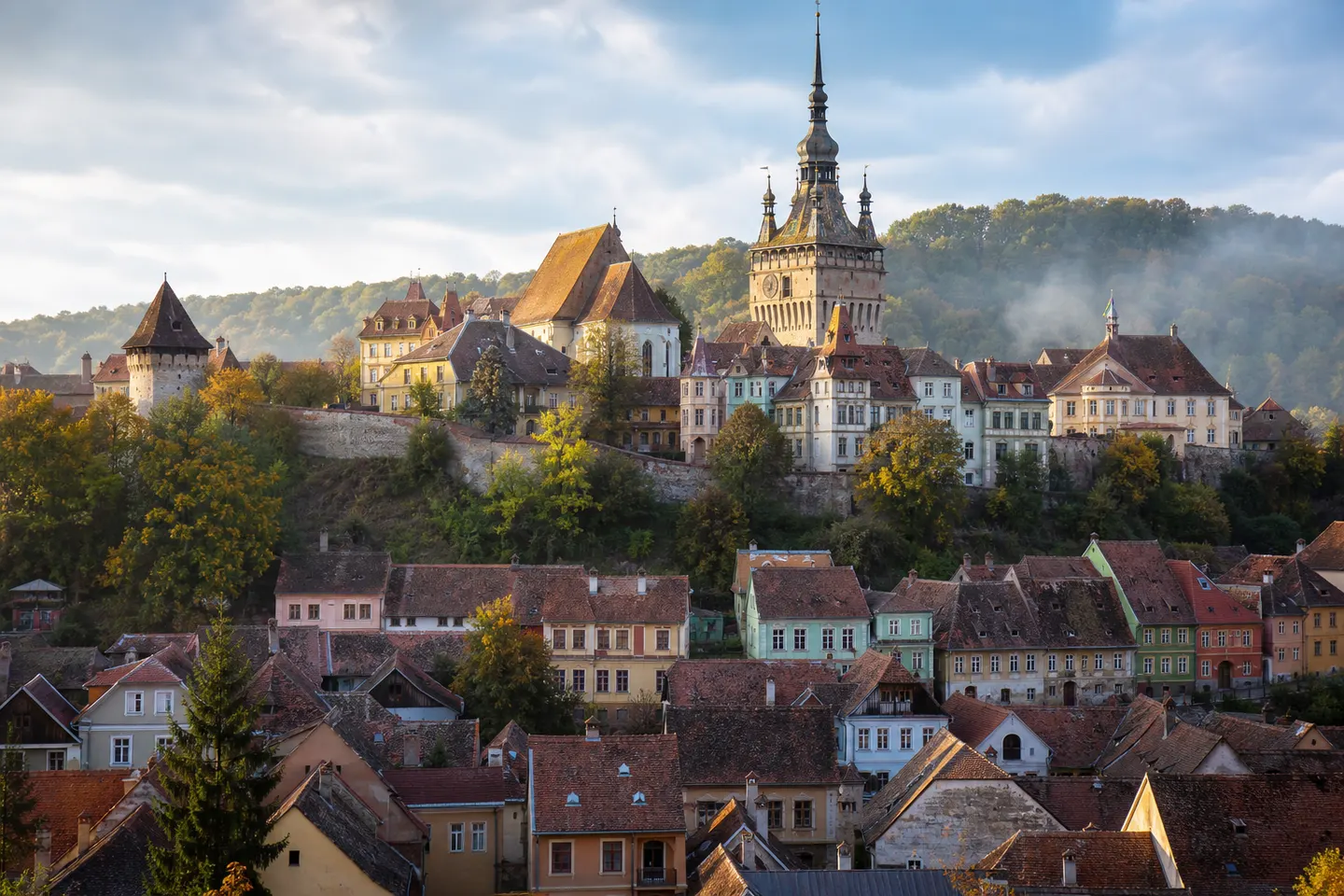
A living Saxon citadel of towers, coloured houses, covered stairs, churches, craft traditions, and Transylvanian hill country.
- Location
- Historic Centre, Sighișoara, Romania
- Difficulty
- Easy
- Best season
- May to June or September to October
Sighișoara’s hilltop citadel is a UNESCO-listed example of a small fortified medieval town founded and developed by Transylvanian Saxons. The Clock Tower forms the principal gateway and contains a history museum and viewing balcony. Within the walls, pastel houses, cobbled lanes, small squares, and surviving guild towers create a compact settlement that is still lived in.
The Covered Scholars’ Stairs lead toward the Church on the Hill and old school buildings. The church contains Gothic architecture and historic religious art, while the German cemetery extends quietly along the ridge. Towers associated with tinsmiths, tailors, furriers, and other trades recall the guilds responsible for defending sections of the citadel.
The lower town along the Târnava Mare has churches, nineteenth-century architecture, and everyday services often missed by brief visits. Museums and interpretation are more useful than the commercial Dracula associations, which can obscure the town’s genuine Saxon, Hungarian, Romanian, and regional history.
Try Transylvanian soups, polenta, cheeses, pastries, and local plum products. Cobbles become slippery in rain or snow, and the citadel remains residential. Check tower and church hours, festival crowd controls, and behave quietly around homes and cemeteries.
The Covered Scholars’ Stairs lead toward the Church on the Hill and old school buildings. The church contains Gothic architecture and historic religious art, while the German cemetery extends quietly along the ridge. Towers associated with tinsmiths, tailors, furriers, and other trades recall the guilds responsible for defending sections of the citadel.
The lower town along the Târnava Mare has churches, nineteenth-century architecture, and everyday services often missed by brief visits. Museums and interpretation are more useful than the commercial Dracula associations, which can obscure the town’s genuine Saxon, Hungarian, Romanian, and regional history.
Try Transylvanian soups, polenta, cheeses, pastries, and local plum products. Cobbles become slippery in rain or snow, and the citadel remains residential. Check tower and church hours, festival crowd controls, and behave quietly around homes and cemeteries.