
Portugal
Portugal from North to South on the N2
Discover Roman heritage, thermal towns, vineyard landscapes, historic interiors, Alentejo villages, and Faro’s lagoon coast.
- Location
- Interior Portugal, from Trás-os-Montes to the Algarve
- Difficulty
- Moderate
- Best season
- April to June or September to October
Portugal's interior reveals a quieter side of the country, moving through thermal towns, river valleys, granite villages, vineyards, cork-oak landscapes, and the open plains of the Alentejo before reaching the Algarve. The changing architecture, food, and climate are as important as any single landmark.
Chaves is known for Roman heritage and naturally hot thermal water. Visitors can see the Roman bridge over the Tâmega, the castle keep, old fortifications, the Roman Baths Museum, historic churches, and the contemporary Nadir Afonso Museum. The riverside paths and traditional smoked meats make the city worth exploring beyond its famous kilometre-zero marker.
Central Portugal adds vineyard and river scenery around the Douro approaches, Viseu's old centre and cathedral area, the Grão Vasco Museum, and smaller towns where markets and cafés remain central to daily life. Around Sertã and Vila de Rei, river beaches, wooded hills, and the geographical centre of mainland Portugal provide a more rural contrast.
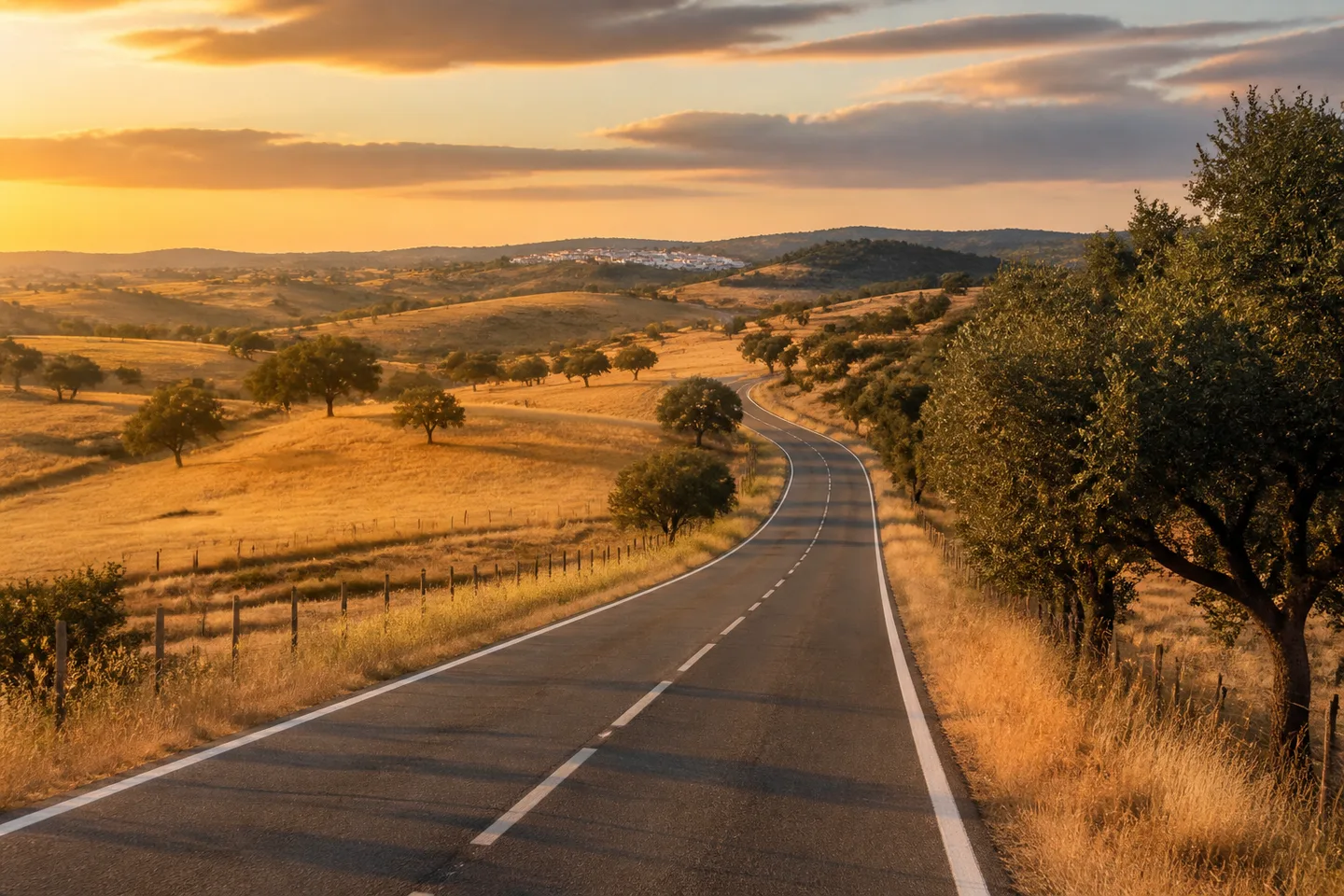
The Alentejo is characterised by cork oaks, olive groves, whitewashed settlements, castles, and broad horizons. Montemor-o-Novo has castle ruins overlooking the town, while regional stops offer bread, olive oil, cheeses, black-pork dishes, and local wines. Heat can be intense in summer, making mornings and evenings better for outdoor visits.
Faro finishes the journey with a walled old town entered through Arco da Vila, a cathedral overlooking the lagoon, museums, pedestrian streets, and the Ria Formosa Natural Park. Boat trips reach lagoon islands and beaches, with birdlife and tidal landscapes changing throughout the day. Check opening hours, boat conditions, wildfire warnings, and seasonal heat information as you travel.
Chaves is known for Roman heritage and naturally hot thermal water. Visitors can see the Roman bridge over the Tâmega, the castle keep, old fortifications, the Roman Baths Museum, historic churches, and the contemporary Nadir Afonso Museum. The riverside paths and traditional smoked meats make the city worth exploring beyond its famous kilometre-zero marker.
Central Portugal adds vineyard and river scenery around the Douro approaches, Viseu's old centre and cathedral area, the Grão Vasco Museum, and smaller towns where markets and cafés remain central to daily life. Around Sertã and Vila de Rei, river beaches, wooded hills, and the geographical centre of mainland Portugal provide a more rural contrast.
The Alentejo is characterised by cork oaks, olive groves, whitewashed settlements, castles, and broad horizons. Montemor-o-Novo has castle ruins overlooking the town, while regional stops offer bread, olive oil, cheeses, black-pork dishes, and local wines. Heat can be intense in summer, making mornings and evenings better for outdoor visits.
Faro finishes the journey with a walled old town entered through Arco da Vila, a cathedral overlooking the lagoon, museums, pedestrian streets, and the Ria Formosa Natural Park. Boat trips reach lagoon islands and beaches, with birdlife and tidal landscapes changing throughout the day. Check opening hours, boat conditions, wildfire warnings, and seasonal heat information as you travel.