
Portugal
The Algarve: Lagos & Ria Formosa
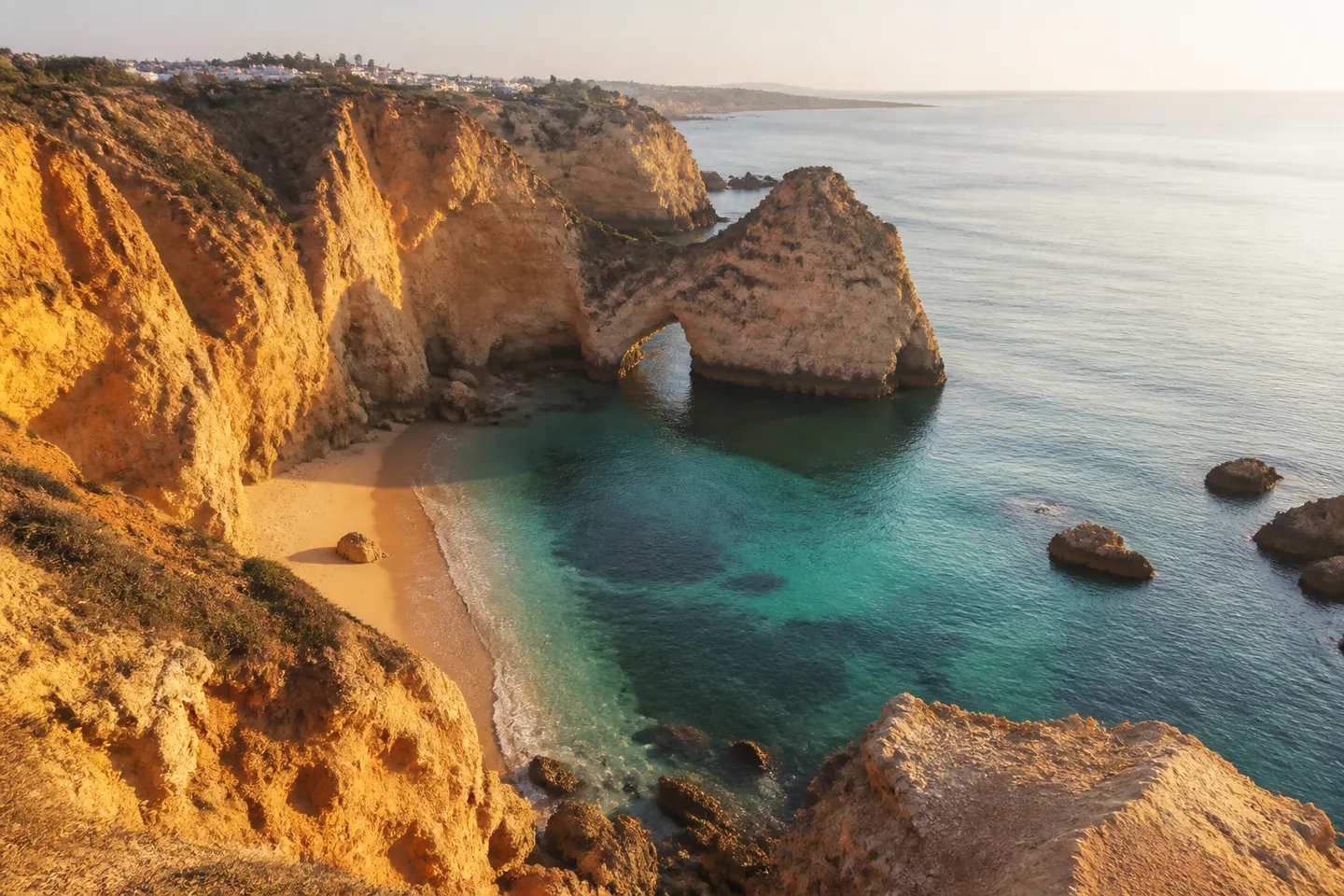
Golden cliffs, sheltered coves, maritime history, lagoon islands, and whitewashed towns along Portugal’s southern coast.
- Location
- Lagos, Faro, Tavira, and Ria Formosa, Portugal
- Difficulty
- Easy
- Best season
- April to June or September to October
The Algarve is far more varied than a single beach resort. Around Lagos, ochre cliffs frame small Atlantic coves, sea arches, and clear-water viewpoints. The old centre adds tiled façades, cobbled lanes, the Church of Santo António, the former slave-market building, and fortifications that reflect the city’s long maritime history. Ponta da Piedade is especially memorable from the marked cliff paths or on a responsibly operated boat trip when sea conditions permit.
Farther east, Faro has a compact walled old town entered through Arco da Vila, a cathedral square, museums, and views across the Ria Formosa. This protected lagoon is a shifting landscape of salt marsh, tidal channels, sandbanks, and barrier islands. Boat services connect places such as Ilha Deserta, Farol, Culatra, and Armona, where simple settlements open onto long beaches. Birdlife changes with the season and tide.
Tavira brings together a riverside setting, a Roman-era bridge site, church towers, castle gardens, and traditional rooftops. Nearby Santa Luzia is associated with octopus fishing, while Cacela Velha looks over the lagoon from a small historic village. Local menus feature grilled fish, cataplana, shellfish, figs, almonds, and regional sweets.
Summer heat and parking pressure can be considerable. Use boardwalks and marked cliff paths, respect lagoon habitats, and confirm boat times, beach access, fire warnings, and sea conditions before visiting.
Farther east, Faro has a compact walled old town entered through Arco da Vila, a cathedral square, museums, and views across the Ria Formosa. This protected lagoon is a shifting landscape of salt marsh, tidal channels, sandbanks, and barrier islands. Boat services connect places such as Ilha Deserta, Farol, Culatra, and Armona, where simple settlements open onto long beaches. Birdlife changes with the season and tide.
Tavira brings together a riverside setting, a Roman-era bridge site, church towers, castle gardens, and traditional rooftops. Nearby Santa Luzia is associated with octopus fishing, while Cacela Velha looks over the lagoon from a small historic village. Local menus feature grilled fish, cataplana, shellfish, figs, almonds, and regional sweets.
Summer heat and parking pressure can be considerable. Use boardwalks and marked cliff paths, respect lagoon habitats, and confirm boat times, beach access, fire warnings, and sea conditions before visiting.