
Lithuania
Vilnius Old Town & Užupis
Baroque churches, university courtyards, hilltop views, Jewish memory, artists’ streets, markets, and a layered Lithuanian capital.
- Location
- Old Town and Užupis, Vilnius, Lithuania
- Difficulty
- Easy
- Best season
- May to September
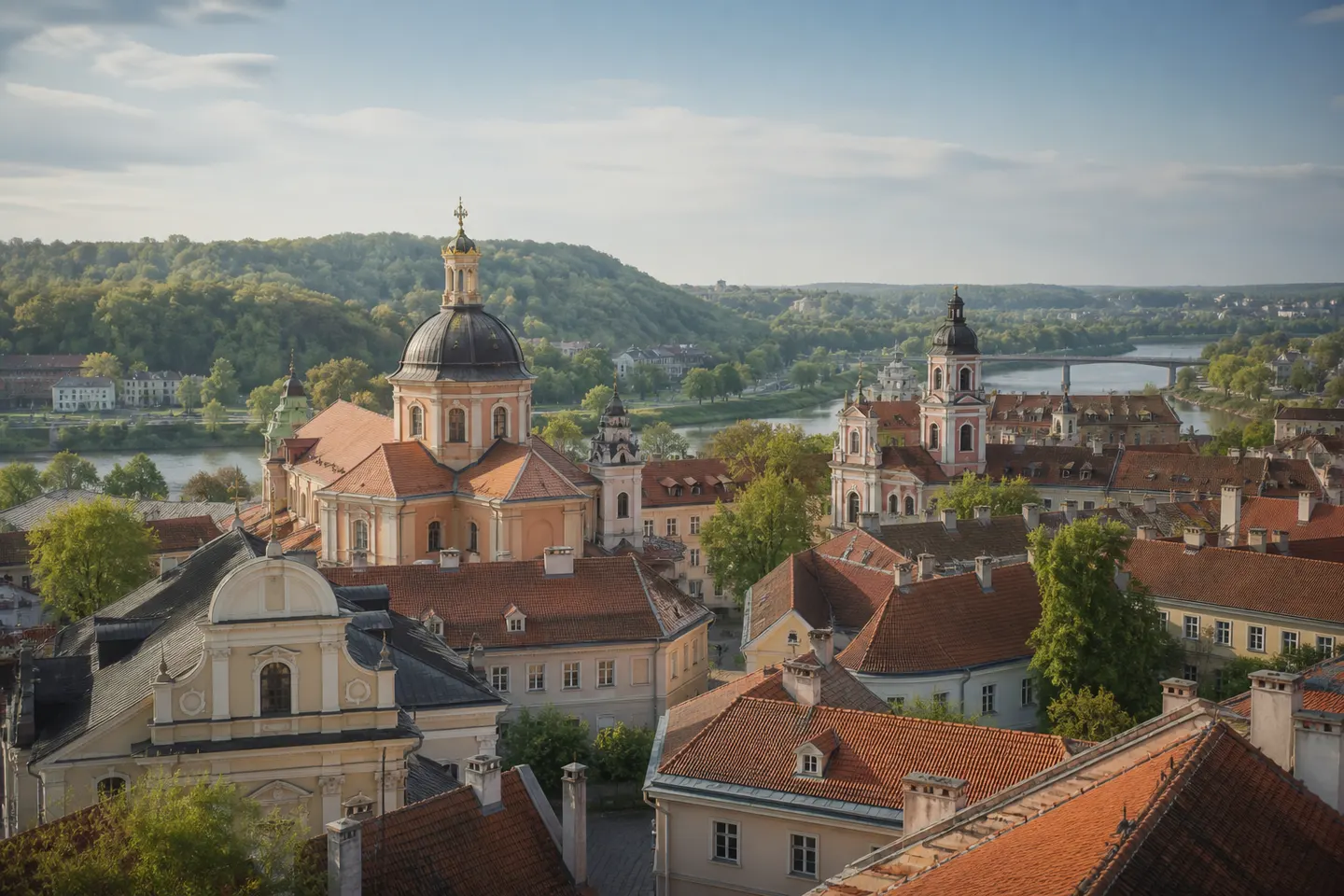
Vilnius has one of Europe’s largest surviving medieval old towns, though much of its visible character is baroque. Cathedral Square, the Palace of the Grand Dukes, Gediminas Tower, and the Bernardine Garden form a historic core beneath green hills. Farther south, Pilies Street leads through university courtyards, churches, and merchant architecture toward the Gates of Dawn.
The ensemble around Saint Anne’s and the Bernardine Church is especially striking, while the Church of Saints Peter and Paul contains an extraordinary white stucco interior. Vilnius University reveals centuries of scholarship through linked courtyards and decorated halls, subject to academic and visitor access. Hilltop viewpoints change with weather and can be slippery in winter.
Užupis, across the Vilnia River, is known for galleries, workshops, playful public art, and its self-declared republic. Its creativity sits alongside ordinary residential life, so explore respectfully. The former Jewish quarter, Vilna Gaon Museum sites, and Paneriai Memorial confront the destruction of a community once central to the city.
Try cepelinai, cold beet soup, rye bread, kibinai, and local cheeses. Museum branches have different opening days, and churches restrict access during services. Check current exhibitions, memorial guidance, and weather before visiting viewpoints.
The ensemble around Saint Anne’s and the Bernardine Church is especially striking, while the Church of Saints Peter and Paul contains an extraordinary white stucco interior. Vilnius University reveals centuries of scholarship through linked courtyards and decorated halls, subject to academic and visitor access. Hilltop viewpoints change with weather and can be slippery in winter.
Užupis, across the Vilnia River, is known for galleries, workshops, playful public art, and its self-declared republic. Its creativity sits alongside ordinary residential life, so explore respectfully. The former Jewish quarter, Vilna Gaon Museum sites, and Paneriai Memorial confront the destruction of a community once central to the city.
Try cepelinai, cold beet soup, rye bread, kibinai, and local cheeses. Museum branches have different opening days, and churches restrict access during services. Check current exhibitions, memorial guidance, and weather before visiting viewpoints.