
Latvia
Riga: Old Town & Art Nouveau Quarter
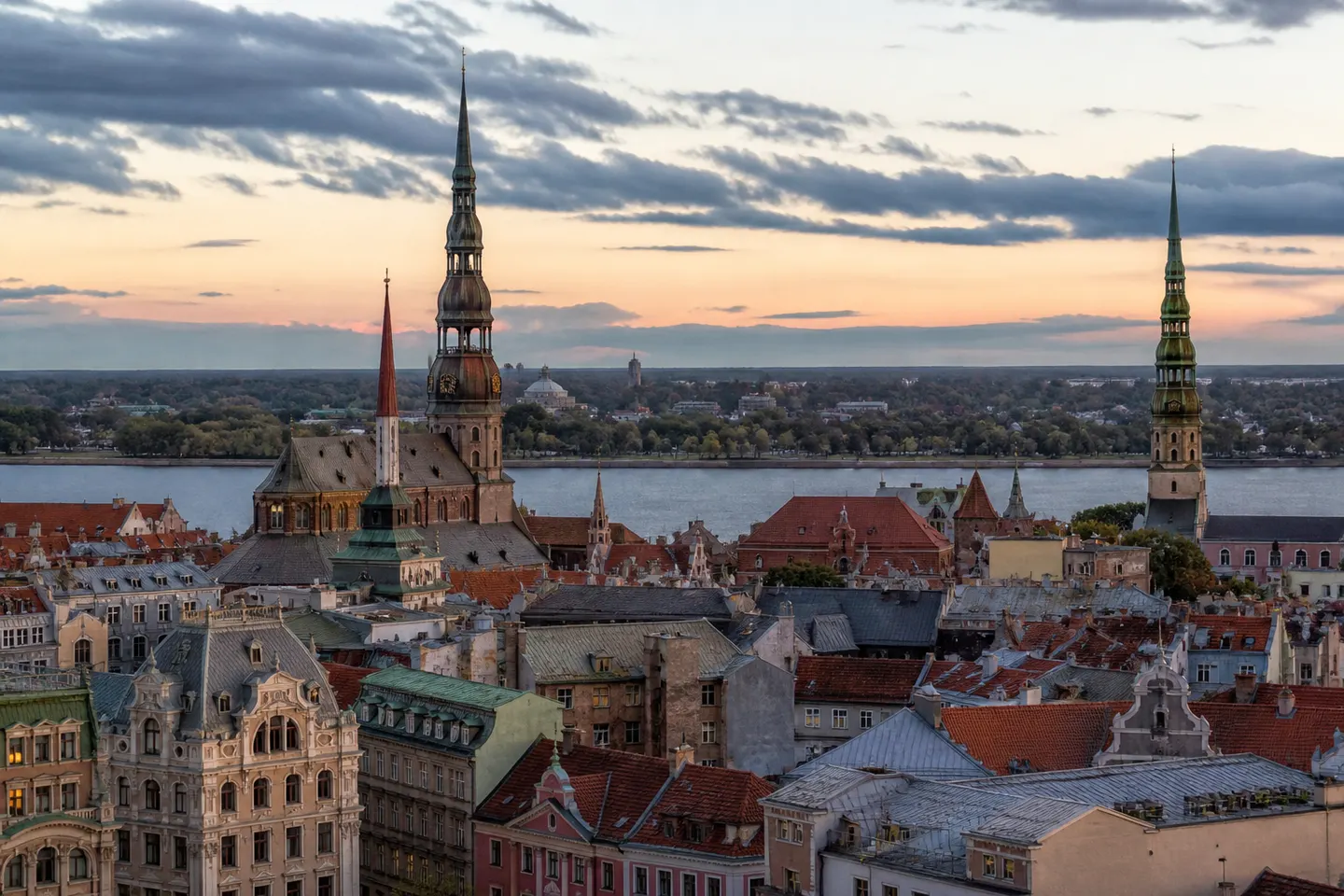
Hanseatic streets, immense churches, Art Nouveau façades, wooden districts, markets, museums, and life beside the Daugava.
- Location
- Old Riga and the Art Nouveau district, Riga, Latvia
- Difficulty
- Easy
- Best season
- May to September
Riga’s Old Town combines medieval street patterns with later guild halls, churches, warehouses, and civic architecture. Dome Square, Riga Cathedral, Saint Peter’s Church, the Three Brothers, Swedish Gate, and House of the Blackheads reveal different periods of commerce and city government. The riverfront and former defensive canal help explain the historic city’s shape.
Riga is also internationally important for Art Nouveau. Alberta iela and surrounding streets display expressive stone façades, while the Riga Art Nouveau Centre occupies an apartment with a remarkable stairwell and period interior. Nearby boulevards, parks, the National Opera, and Latvian National Museum of Art reflect the city’s nineteenth-century expansion.
The Central Market fills former Zeppelin hangars with produce, fish, breads, and prepared foods. Across and beyond the centre, wooden-house districts such as Āgenskalns and the Kalnciema Quarter show another architectural tradition. The Museum of the Occupation of Latvia and Žanis Lipke Memorial provide essential context for the twentieth century.
Try rye bread, grey peas, smoked fish, local cheeses, and seasonal berries. Weather can turn quickly from the Baltic. Check church tower access, museum hours, market schedules, and respectful guidance at memorial sites.
Riga is also internationally important for Art Nouveau. Alberta iela and surrounding streets display expressive stone façades, while the Riga Art Nouveau Centre occupies an apartment with a remarkable stairwell and period interior. Nearby boulevards, parks, the National Opera, and Latvian National Museum of Art reflect the city’s nineteenth-century expansion.
The Central Market fills former Zeppelin hangars with produce, fish, breads, and prepared foods. Across and beyond the centre, wooden-house districts such as Āgenskalns and the Kalnciema Quarter show another architectural tradition. The Museum of the Occupation of Latvia and Žanis Lipke Memorial provide essential context for the twentieth century.
Try rye bread, grey peas, smoked fish, local cheeses, and seasonal berries. Weather can turn quickly from the Baltic. Check church tower access, museum hours, market schedules, and respectful guidance at memorial sites.