
Bosnia and Herzegovina
Mostar Old Town
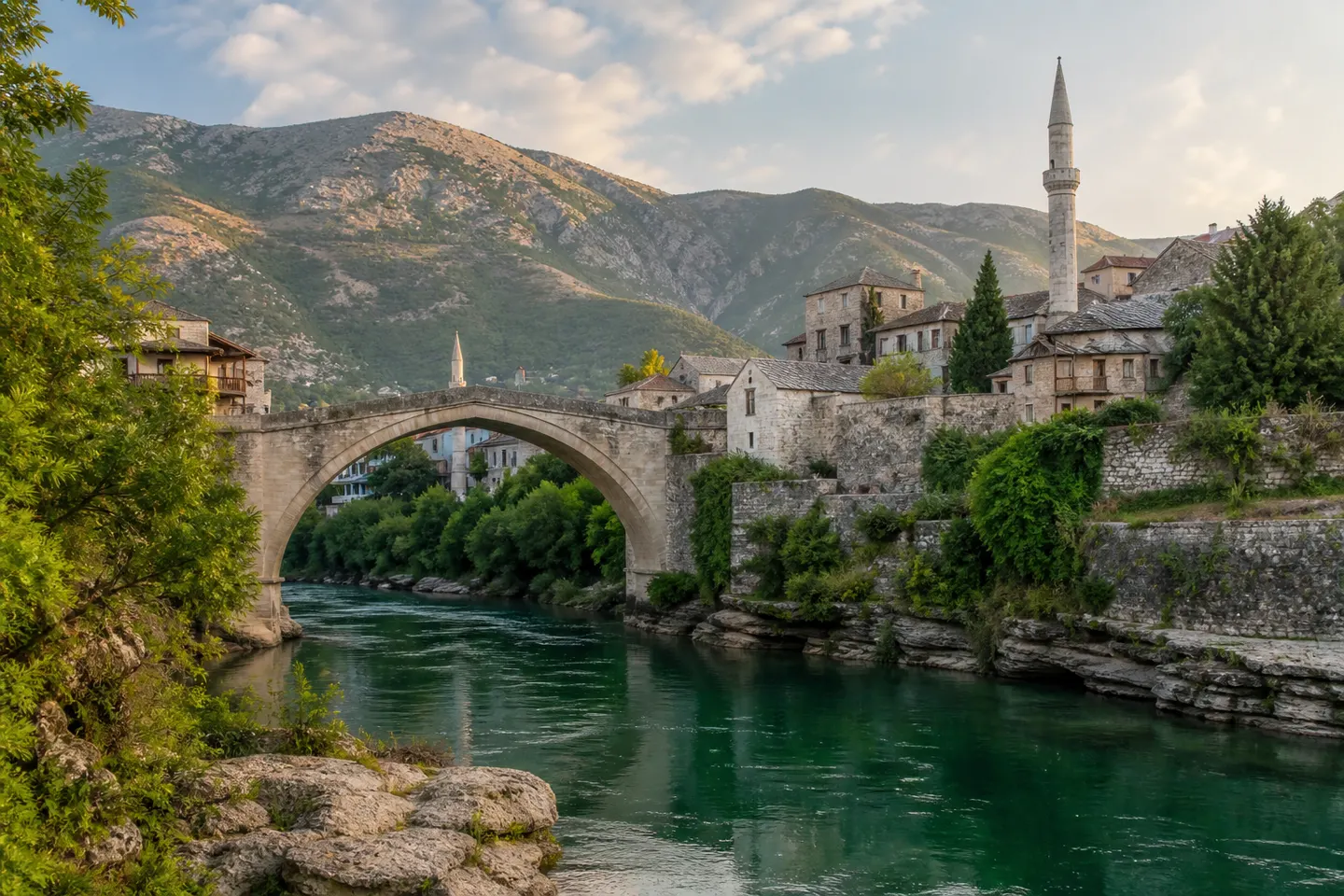
A reconstructed Ottoman bridge, stone bazaar streets, mosques, museums, river views, and the layered heritage of Herzegovina.
- Location
- Old Town and Neretva riverfront, Mostar, Bosnia and Herzegovina
- Difficulty
- Easy
- Best season
- April to June or September to October
Mostar’s historic centre developed around the Neretva River and its celebrated Old Bridge. The sixteenth-century Ottoman bridge and surrounding buildings were destroyed during the 1990s war and later reconstructed using traditional materials and techniques. The UNESCO inscription recognises both the architectural ensemble and the symbolism of reconciliation attached to its restoration.
On either bank, the Kujundžiluk bazaar follows stone-paved lanes past workshops, cafés, and traditional houses. The Koski Mehmed Pasha Mosque complex offers views over the bridge when access permits, while the Bišćević and Muslibegović houses illuminate domestic architecture. Museums address the bridge, local history, and the war; choose serious interpretation over spectacle.
Beyond the busiest lanes, walk along the river viewpoints and explore Austro-Hungarian architecture in the wider city. Nearby Blagaj contains a historic dervish house beside the powerful Buna spring, while Počitelj preserves a fortified hillside settlement. Both require respect for religious practice, residents, and natural conditions.
Try grilled meats, stuffed vegetables, pies, Herzegovinian cheeses, coffee, and local wine. Summer heat is intense and polished stones are slippery. Check museum and mosque access, dress requirements, current swimming warnings, and never attempt bridge diving.
On either bank, the Kujundžiluk bazaar follows stone-paved lanes past workshops, cafés, and traditional houses. The Koski Mehmed Pasha Mosque complex offers views over the bridge when access permits, while the Bišćević and Muslibegović houses illuminate domestic architecture. Museums address the bridge, local history, and the war; choose serious interpretation over spectacle.
Beyond the busiest lanes, walk along the river viewpoints and explore Austro-Hungarian architecture in the wider city. Nearby Blagaj contains a historic dervish house beside the powerful Buna spring, while Počitelj preserves a fortified hillside settlement. Both require respect for religious practice, residents, and natural conditions.
Try grilled meats, stuffed vegetables, pies, Herzegovinian cheeses, coffee, and local wine. Summer heat is intense and polished stones are slippery. Check museum and mosque access, dress requirements, current swimming warnings, and never attempt bridge diving.